 Download slides
Non-auto exports drive trade growth for Mexico
Published: Thursday, February 05, 2026 | 09:00 AM CDT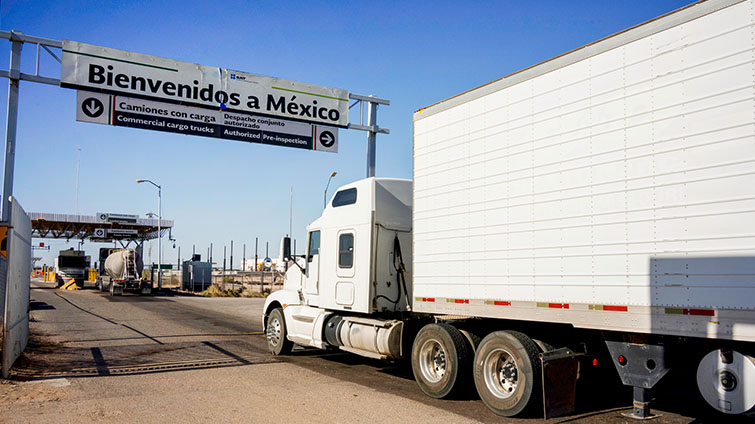
U.S.-Mexico
Exports going strong but with a different mix
Mexico closed 2025 with a strong finish. December exports surged 17.2% year over year (y/y), the fastest monthly growth since February 2023, signalling that cross-border trade not only withstood the challenges of 2025 but accelerated into year end. For the full year, exports rose a record 7.6% and Mexico posted its first trade surplus in four years.
Beneath that headline growth, however, the export mix is undergoing a meaningful shift. Non-automotive manufacturing led the expansion, with computers, electronics, machinery and related equipment up 17.3% and now accounting for nearly two-thirds of total exports. December was particularly striking, as machinery and specialised equipment exports nearly doubled, while electrical and electronic equipment continued to post solid gains.
In contrast, automotive exports declined 4.2% in 2025, marking the sector’s first annual contraction since the pandemic. December showed a modest rebound, but gains were driven entirely by non-U.S. destinations, as deliveries to the United States continued to decline.
This divergence underscores a broader transformation under way. Mexico’s export engine remains strong, but it is becoming less reliant on automotive production and increasingly anchored in electronics and advanced manufacturing. Computing equipment has now surpassed light vehicles as Mexico’s top export to the United States, reflecting the impact of nearshoring, data centre investment and AI-related infrastructure demand. These trends point to continued strength in electronics-driven freight flows into 2026.
USMCA review delays capital expenditures
Southbound volumes tell a different story. Manufacturers are adopting a more cautious posture as the U.S.-Mexico-Canada Agreement (USMCA) is being reviewed, delaying capital deployment despite strong long-term commitments. Capital goods imports fell in 2025 and investment in machinery and equipment slowed noticeably through the second half of the year. This pause appears tactical rather than structural, as foreign direct investment announcements reached record levels in 2025. These projects typically take several years to translate into new freight demand.
The net effect heading into 2026 is rotation rather than contraction. Northbound volumes are expected to remain steady but increasingly concentrated in non-automotive freight, while southbound flows remain softer. Electronics-focused corridors should continue to outperform, while automotive lanes may lag unless production schedules improve, a dynamic that could tighten capacity quickly given reduced carrier investment.
Watch the exchange rate
Currency dynamics add another layer to watch. The Mexican peso enters 2026 at its strongest since mid-2024, appreciating 17% in January against the dollar. Continued strength would support import purchasing power but could pressure carrier margins, making exchange rates an important variable for cross-border pricing and capacity decisions in the months ahead.
U.S.-Canada
New mandatory training for drivers in Quebec
Quebec’s shift to mandatory training for Class 1 truck drivers, implemented one month ago, represents one of the most significant regulatory changes to the province’s trucking sector in years. While the move is intended to improve safety and professionalism, it also introduces meaningful challenges related to cost, accessibility and labour availability, particularly for smaller carriers.
Many of these operators rely heavily on international or interprovincial drivers to supplement their workforce and limitations on those drivers under the new framework could materially constrain capacity. Over time, this pressure may prove unsustainable for some, increasing the risk of carriers leaving the market.
Carriers broadly support the intent behind mandatory training but continue to question whether the 125-hour PESR programme is sufficiently robust when compared to the 615-hour DEP pathway. As implementation continues, the industry will be closely monitoring how the new requirements impact driver supply, carrier operations and overall market stability, particularly through the remainder of the winter and into the spring delivery season.
Weather impacts
These regulatory changes are unfolding against a backdrop of typical Canadian winter conditions. Cold temperatures, snow and periodic winter storms are a normal feature this time of year in Quebec and are already contributing to routine operational disruptions, including slower transit times, reduced productivity and tighter short-term capacity. The combination of seasonal disruption and structural labour constraints may amplify volatility in the near term.
trade policy
Beyond domestic regulatory changes, carriers and shippers alike are keeping a close eye on broader cross-border policy developments that could influence trade flows and freight demand between Canada and the United States. Trade tensions between the United States and Canada have escalated recently, with threats of higher tariffs from the United States if Canada continues pursuing a trade deal with China.
Thus far, no new tariffs have been agreed upon or implemented. While negotiations and policy signalling continue ahead of upcoming decisions on the USMCA, the situation remains fluid, creating uncertainty without yet translating into concrete trade or freight disruptions.
 Actionable freight insights